Unconventional (but effective) Crank Balancing
This job actually came into the shop for a seized camshaft and broken timing gears but, as is often the case, the deeper you dig ……..I noticed the crank had been twisted by the seizure and set about truing it on Vee-blocks. It been fitted with a very nice Carrillo rod, but not been re-balanced afterwards. This rod is significantly lighter than the original, so re-balancing is essential. It was, initially, so far out balance, almost 140g at the crankpin, that I was confused for a while, but re-checked the calcs and corrected my error.
Firstly to run through the calcs to arrive at a Balance Factor of 68%.
We have found 68-70% works well on Venoms for road use.
Piston and pin 600g
Little end (horizontal) 159g
759g x 68% =516g
Less the rod =357g to balance
Current actual 495g
Difference 138g @ crankpin
Crank throw is 43mm
Radius of balancing holes say 86mm
Mass to remove 138 x 43/86 = 69g
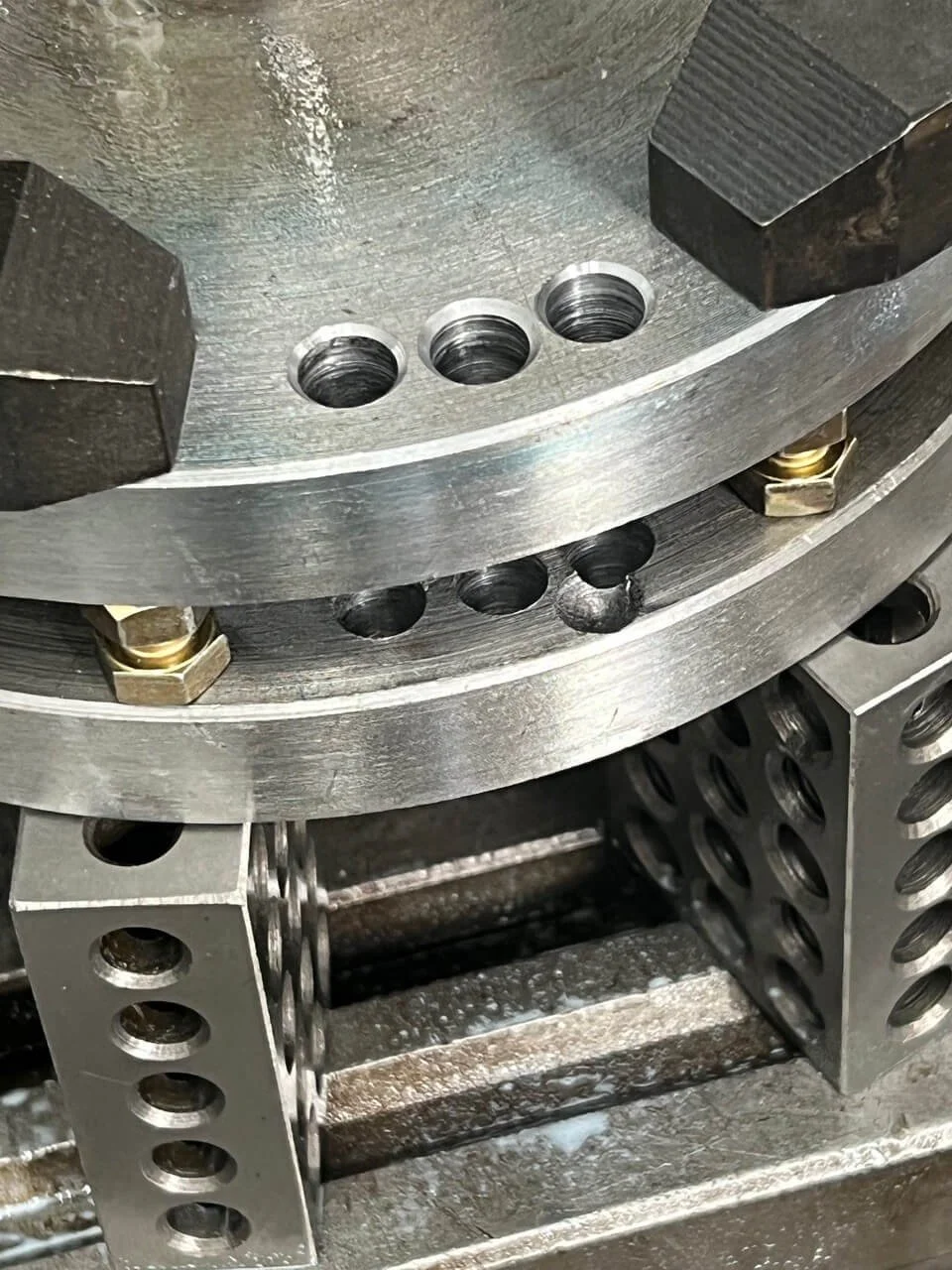
3 off 10mm holes through both flywheels
0.5 x 0.5 x 3.142 x 3.8 x 3 =8.955 cc
Take steel as 7.5 g/cm3
8.955 x 7.5=67.163g
That should allow me enough to adjust to final balance with countersinking.
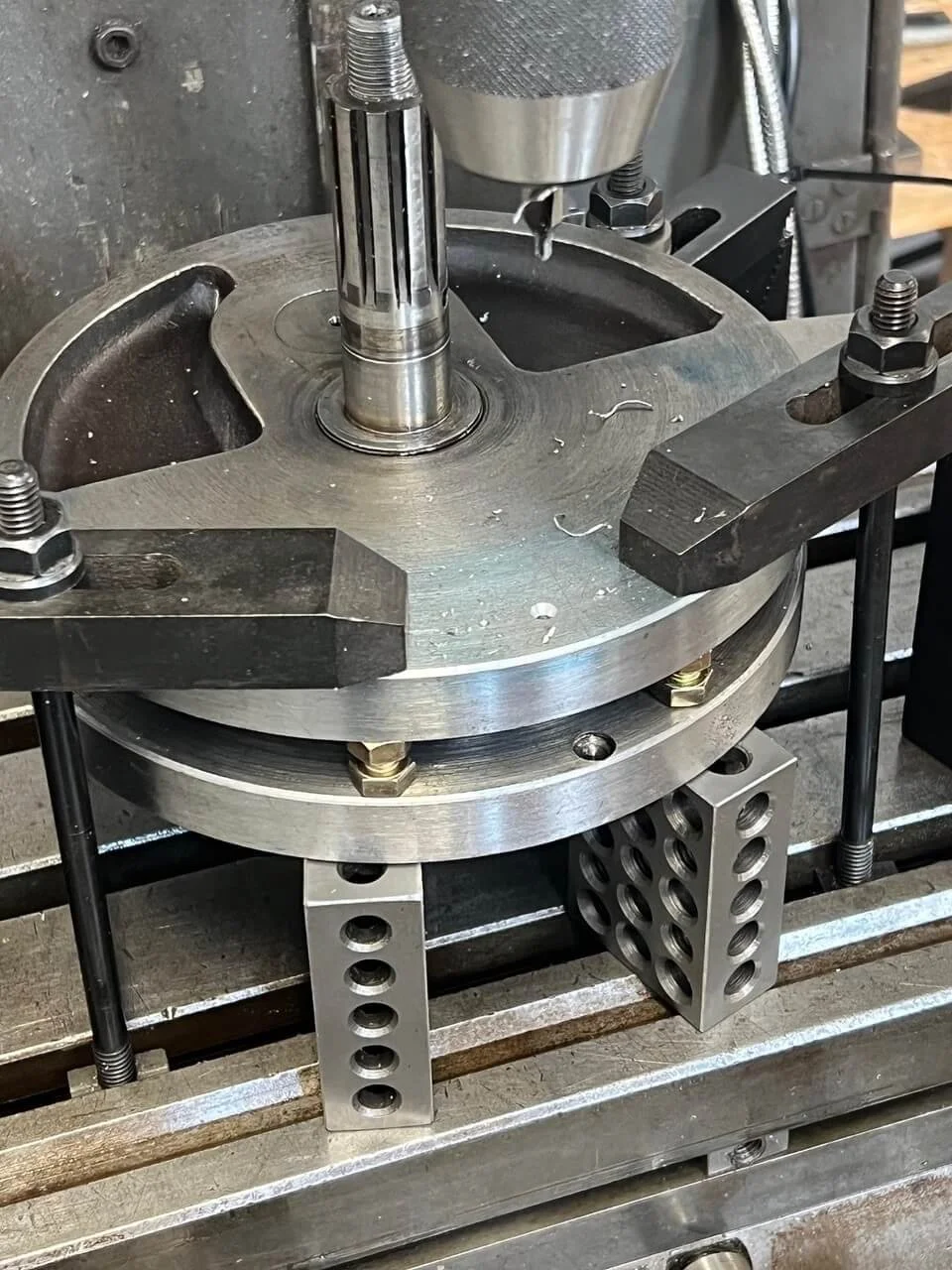
And that is how it worked out. I marked it up and chocked the flywheels apart with short bolts, before setting up in the mill to drill.
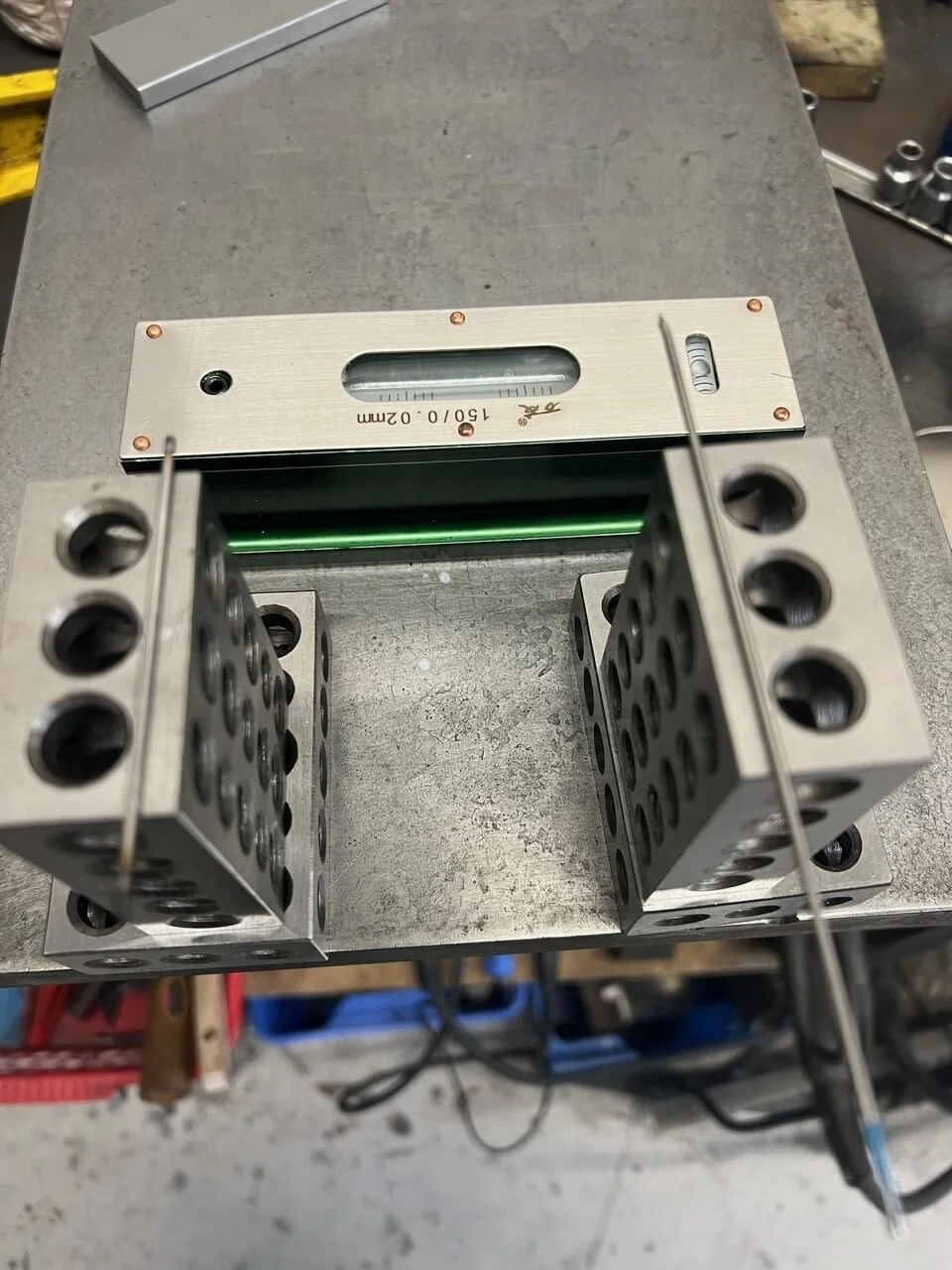
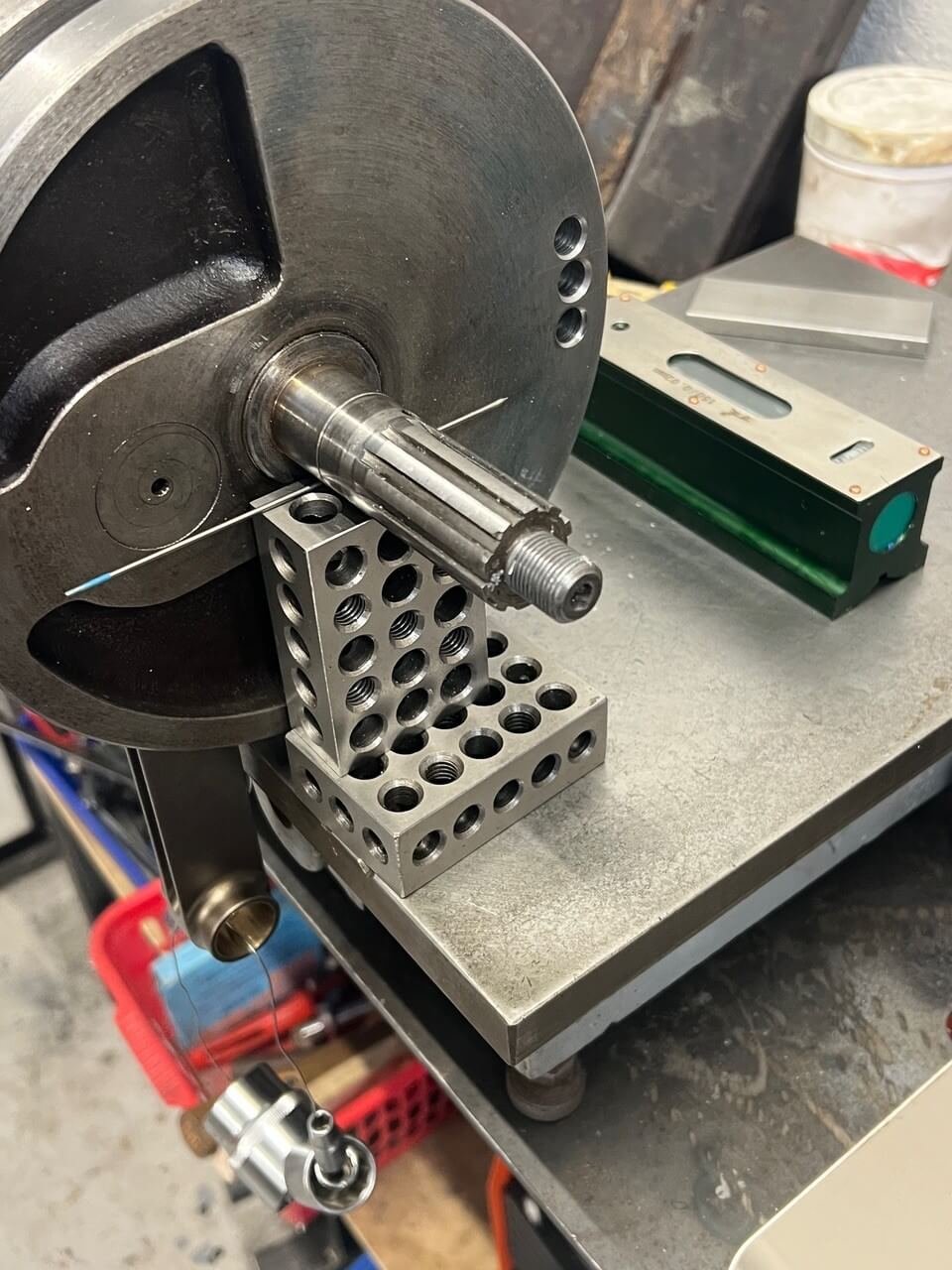
Next on to the balancing. I am actually making a roller rig for this, but it is not yet finished, and I’m not sure in necessary anyway. I currently use 123 blocks on a levelled surface plate, with the weights hanging free over the edge of the bench. The weights are a variety of sockets and you can get very fine increments with successive sizes of ¼” drive, I hang them from the little end with some locking wire, which is also included in the weighing.
To appease those who don’t like my set-up, I ran the crank on a pair of tungsten Tig rods for a knife edge (which made no measurable difference). The surface table was levelled to within 0.02mm/m with an engineers level. I very much doubt if a conventional roller set up would be any more accurate, as there is negligible friction on my set up.
As expected the crankpin side was very slightly light after the drilling and I was able to bring it to true balance by just countersinking the holes as planned. I fitted new main bearings and re-checked the run out before re-building. I check run-out on the flywheel perimeters, not the outer part of the shafts as would be normal, owing to the tendency of some owners to wallop the timing side crank end to remove the drive gear. This obviously causes damage and distortion.
After a very close shave with oblivion, I am sure this engine can now go on to a long and happy life.